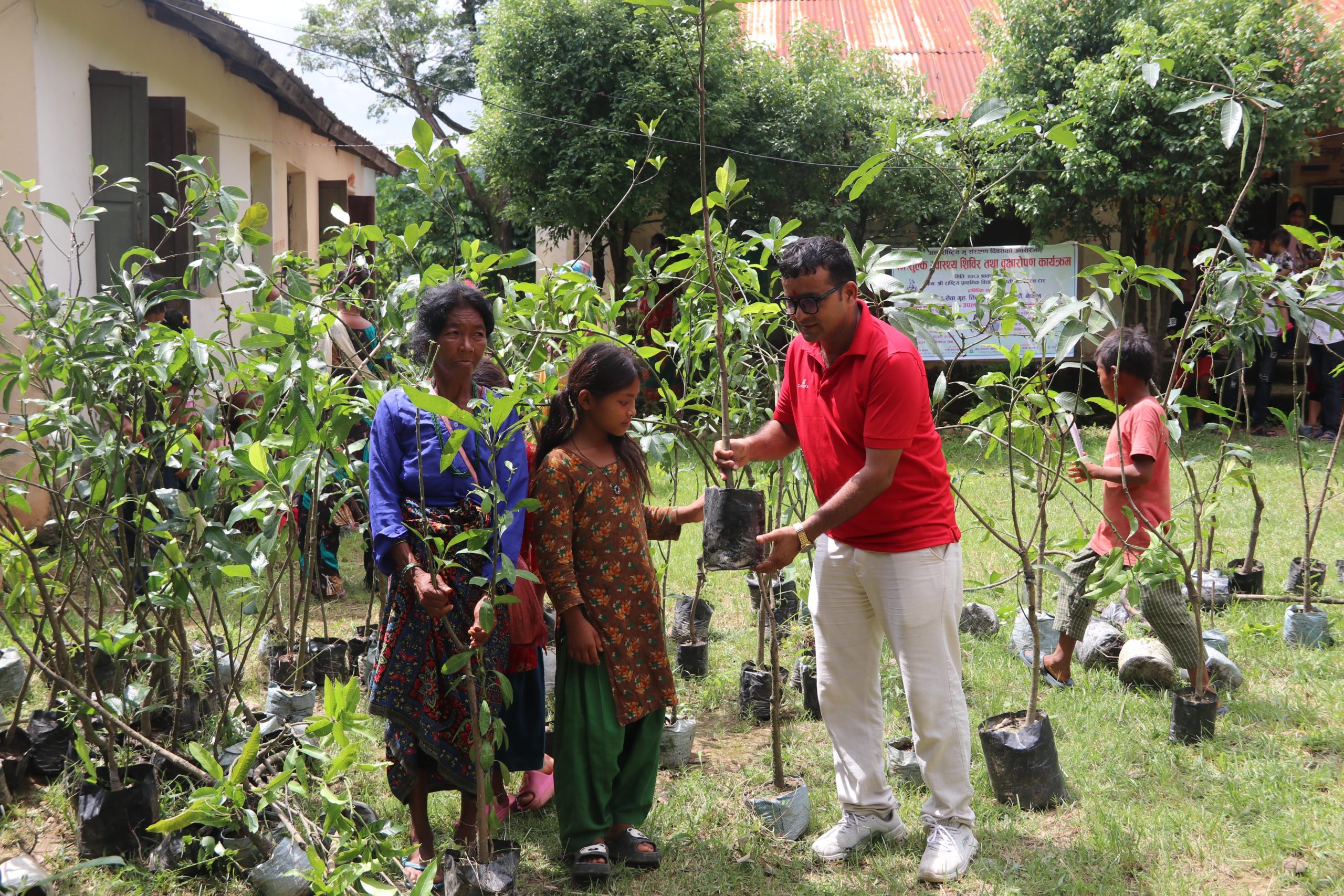
Chitwan: A comprehensive health camp modeled as a ‘mini hospital’ and a program to distribute more than 2,000 fruit saplings have been completed in various parts of Chitwan with the objective of improving healthcare and promoting livelihoods among disadvantaged and Chepang communities living in remote rural areas.
The program was organized by Green Society Nepal, Sauraha, with support from Shanti Sewa Griha, Tilganga, Kathmandu, and Shanti Med Nepal.
According to Shrilal Pariyar, General Secretary of Green Society Nepal, more than 2,000 fruit saplings were distributed in various wards of Kalika and Rapti municipalities on Saturday and Sunday. Programs have already been conducted in Majhwang and Siddhi of Kalika Municipality and Korak and Chaughada of Rapti Municipality. The program was held for the third time at Kirantar in Ward No. 10 of Rapti Municipality on Sunday.
Mango, litchi, guava, lemon, papaya and jackfruit saplings were distributed with the aim of improving the livelihoods of local residents and increasing environmental greenery. According to Bijendra Kunwar, Program Coordinator at Shanti Sewa Griha, each household was provided with four saplings.
Coordinator Kunwar said the campaign was launched with the objective of reducing dependence on potentially contaminated and chemical-treated fruits imported from India and encouraging local communities to produce fruits in Nepal’s fertile soil, thereby promoting self-reliance.
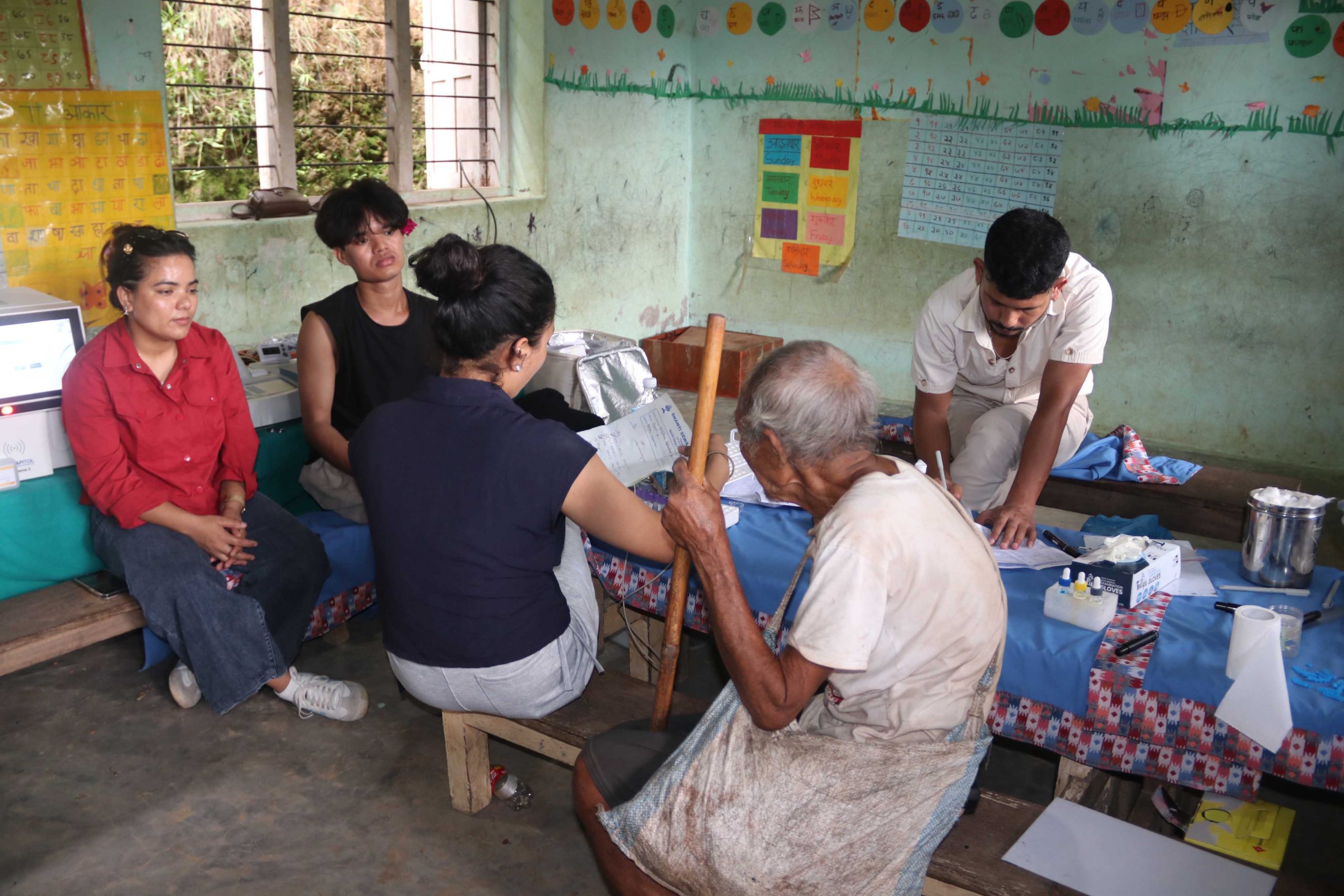
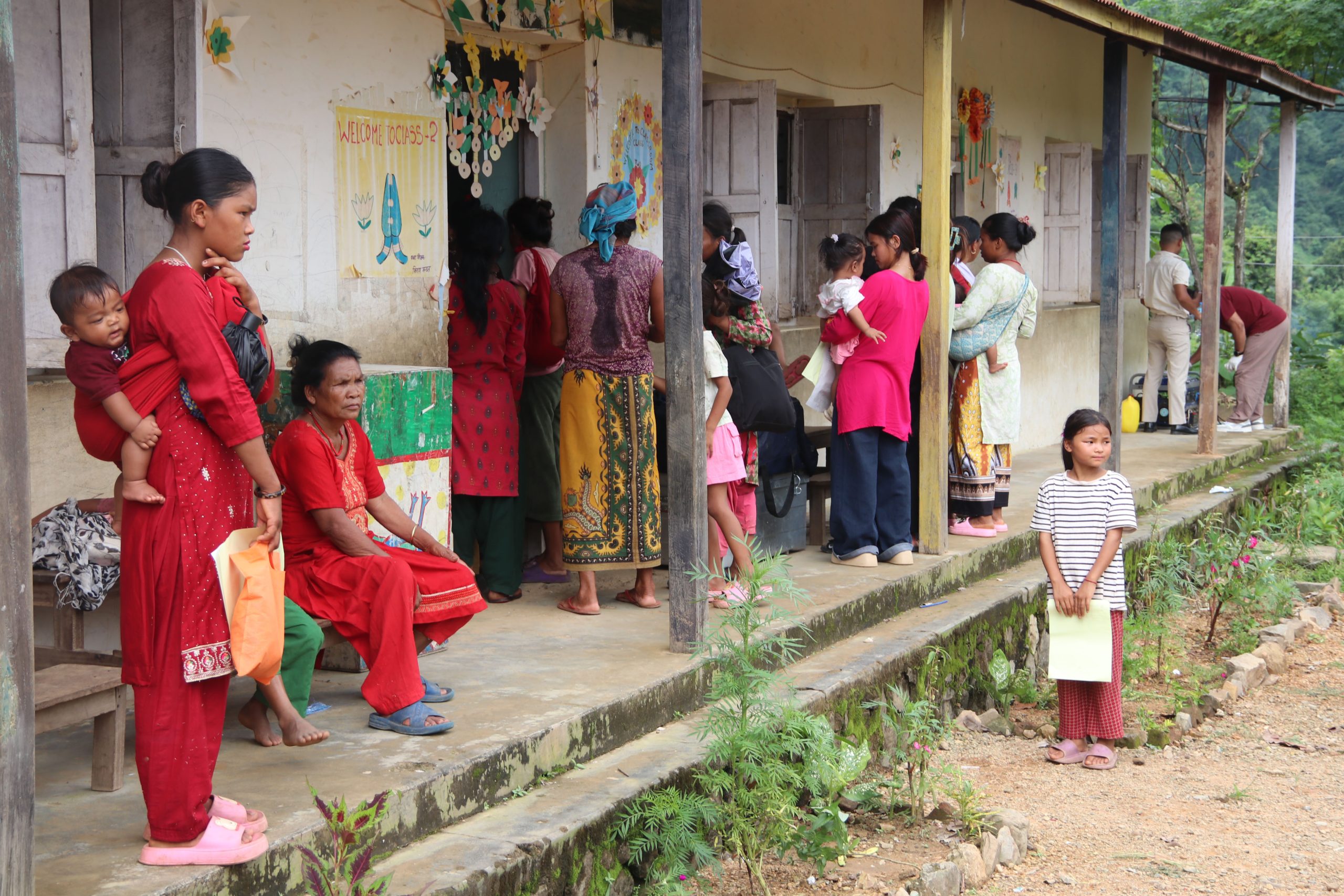
Social activist Keshav Acharya said a ‘mini hospital’ facility was set up at the program site so that local residents would not be forced to lose their lives due to a lack of basic medical treatment or medicines. The health camp provided eye care, dental care, gynecology, and general physician services, along with laboratory tests, video X-ray and free pharmacy services in the village itself.
Heiko Hans Grosspies, Country Director of Shanti Sewa Griha, had visited a Chepang settlement five years ago and witnessed the difficult living conditions there. Since then, under his direction, specialist medical teams have been visiting these remote areas three to four times a year to conduct health camps.
Speaking at the program, Tej Bahadur Tamang, Ward Chairperson of Rapti Municipality-10, praised the contribution made by social organizations to Chepang settlements that remain beyond adequate state services.
Ward Chairperson Tamang said that although electricity had reached nearby Bhandara as early as 2040 B.S., some areas of the remote Chepang settlements still remain without electricity even after four decades, forcing local residents to depend on traditional oil lamps.
He said that providing specialist healthcare services in such remote locations every six months, distributing educational materials, replacing damaged roofing sheets of houses and providing fruit saplings for income generation were highly commendable initiatives.
The integrated campaign is expected not only to improve the health status of local residents but also to make a significant contribution to improving the livelihoods of the Chepang community in the coming days.